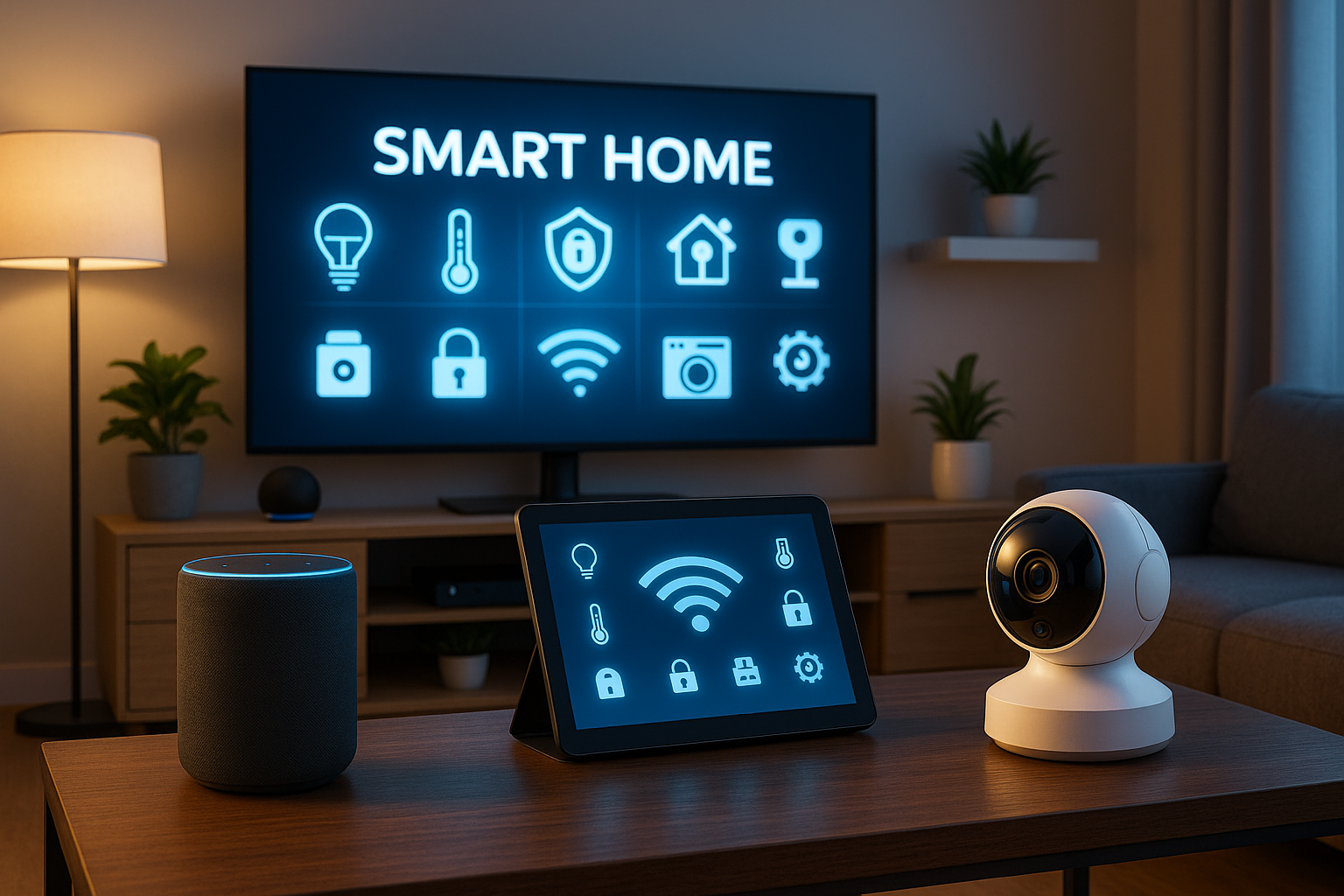
Smart Home Devices and Automation 2026: The Future of Connected Living
Updated on February 28, 2026 – This article includes the latest data and pricing.
Smart Home Devices and Automation 2026: The Future of Connected Living
By Tech Songlirics | Updated November 2025
Introduction: The Rise of Smart Home Devices and Automation 2026
Welcome to the world of Smart Home Devices and Automation 2026 — where homes think, learn, and act intelligently. From AI-powered thermostats to autonomous cleaning robots, technology is revolutionizing how we live. With advancements in IoT (Internet of Things), machine learning, and voice assistants, smart homes are evolving into personalized ecosystems that adapt to human behavior.
In this guide, we’ll explore the best smart home devices, automation trends, AI integration, and what 2026 has in store for the connected household.
Top Smart Home Devices and Automation 2026
Here’s a quick look at the most innovative smart home devices of 2026 — designed to make your life simpler, secure, and more efficient:
- Amazon Echo 6th Gen with Alexa AI+ – A new level of personalization using adaptive voice recognition and local edge computing.
- Google Nest Secure Hub 2026 – Integrated AI surveillance and security with improved privacy controls.
- Samsung SmartThings Matrix – A central hub managing lighting, appliances, and entertainment seamlessly.
- Philips Hue Quantum Lights – Smart lighting powered by solar energy and app-controlled automation.
- iRobot Roomba VisionX – An AI vacuum cleaner that maps your home using LiDAR sensors and learns your cleaning habits.
- Tado Smart Thermostat 5 – Energy-efficient climate control synced with your schedule and weather patterns.
- Ring ProVision Doorbell – 8K video quality and real-time AI visitor detection with encrypted cloud storage.
- Apple HomePod Ultra – Deep HomeKit integration for seamless automation with ultra-wideband sensors.
How Smart Home Automation 2026 Is Changing Everyday Living
Smart home automation is no longer just about convenience — it’s becoming essential for energy management, safety, and sustainability. Here’s how it’s redefining modern lifestyles:
- AI-Driven Personalization: Devices learn your daily habits — from lighting preferences to your ideal room temperature.
- Energy Optimization: Smart plugs and thermostats reduce electricity bills through intelligent monitoring.
- Voice and Gesture Controls: Hands-free management using Alexa, Google Assistant, and Apple Siri.
- Inter-device Connectivity: IoT ensures that every appliance communicates in harmony through a unified network.
- Remote Access: Control your entire home from your smartphone or smartwatch — anywhere, anytime.
According to Statista, over 400 million households worldwide will use at least one form of home automation by 2026.
Key Features of Smart Home Devices 2026
Let’s explore the core features that define the best smart home devices in 2026:
- AI-Powered Learning: Self-learning algorithms enhance automation accuracy over time.
- 5G and Wi-Fi 7 Connectivity: Ultra-fast data transfer and seamless device syncing.
- Voice + Visual Recognition: AI assistants now identify faces and emotions for personalized interactions.
- Cloud & Edge Hybrid Processing: Faster response times and stronger privacy protection.
- Green Energy Integration: Devices that automatically adjust to solar and renewable energy sources.
Smart Home Devices and Automation 2026: Pros and Cons
Pros
- ✅ Enhanced home security with real-time alerts and AI surveillance.
- ✅ Improved energy efficiency and lower electricity costs.
- ✅ Increased convenience through automation and scheduling.
- ✅ Seamless integration with smartphones, TVs, and EVs.
- ✅ Supports sustainability with eco-friendly tech.
Cons
- ⚠️ Privacy concerns due to continuous data collection.
- ⚠️ High initial setup costs for premium automation systems.
- ⚠️ Compatibility issues between brands (still improving).
- ⚠️ Dependence on internet connectivity and cloud access.
Smart Home Devices and Automation 2026 Systems Comparison
| Brand | Compatibility | Voice Assistant | Special Feature | Verdict |
|---|---|---|---|---|
| Amazon Alexa AI+ | Works with 1000+ devices | Alexa | Local edge processing | Best for AI performance |
| Google Nest Secure | Multi-platform | Google Assistant | AI privacy protection | Best for family security |
| Apple HomePod Ultra | Apple ecosystem only | Siri | UWB automation control | Best for Apple users |
| Samsung SmartThings Matrix | Cross-brand compatibility | Bixby / Alexa | Smart hub management | Best all-round system |
Future Trends in Smart Home Automation 2026
The coming years promise massive breakthroughs in smart home technology. Here’s what experts predict:
- AI Predictive Behavior: Homes that anticipate your needs before you act.
- Self-Healing Networks: IoT devices that repair or reboot themselves when errors occur.
- Holographic Displays: Virtual control panels using AR/VR technology.
- Smart Kitchens: Appliances that suggest recipes and order groceries automatically.
- Zero-Energy Homes: Entirely powered by solar and battery systems with automation efficiency.
For more insights, read The Verge’s Smart Home section for the latest automation updates.
Verdict: Is Smart Home Automation Worth It in 2026?
If you value convenience, security, and energy efficiency, investing in Smart Home Devices and Automation 2026 is absolutely worth it. These systems are evolving fast — getting smarter, more affordable, and more eco-friendly.
While the initial cost can be high, the long-term benefits — from energy savings to peace of mind — make it a smart investment for modern living.
FAQs About Smart Home Devices and Automation 2026
1. What are the best smart home devices in 2026?
The best include Amazon Echo 6th Gen, Google Nest Secure 2026, Samsung SmartThings Matrix, and Apple HomePod Ultra for complete ecosystem control.
2. How does AI improve smart home automation?
AI enables personalization — learning habits, optimizing energy use, and automating tasks like lighting, cleaning, and entertainment without human input.

3. Are smart home devices safe to use?
Yes, but ensure devices come from trusted brands with strong encryption and privacy settings. Always update firmware regularly for better protection.
4. What is the average cost of setting up a smart home in 2026?
Depending on size and features, smart home setup costs range from ₹50,000 to ₹3,00,000 in India, or $500–$3000 globally.
5. Can smart home automation save energy?
Absolutely! Smart thermostats, lighting, and plugs reduce unnecessary energy use by optimizing device operation.
6. How to choose the best smart home system?
Pick one compatible with your existing devices. For cross-brand integration, Samsung SmartThings Matrix is ideal. See our smartwatch guide for device pairing tips.
About the author
Tech Song Lirics
Tech Songlirics delivers the latest tech news, smartphone reviews, and gadget updates in India — simplified, reliable, and made for tech lovers who want real insights, not just specs.



 WhatsApp
 X
X Telegram
 Instagram
 Arattai